Your Shipment Is "On Hold" at Customs. Here's What's Actually Happening.
When your freight forwarder says "your shipment is on hold at customs," what does that actually mean? Our 15-years experienced team explains the real reasons, the process, and what you should be asking.
5 min read
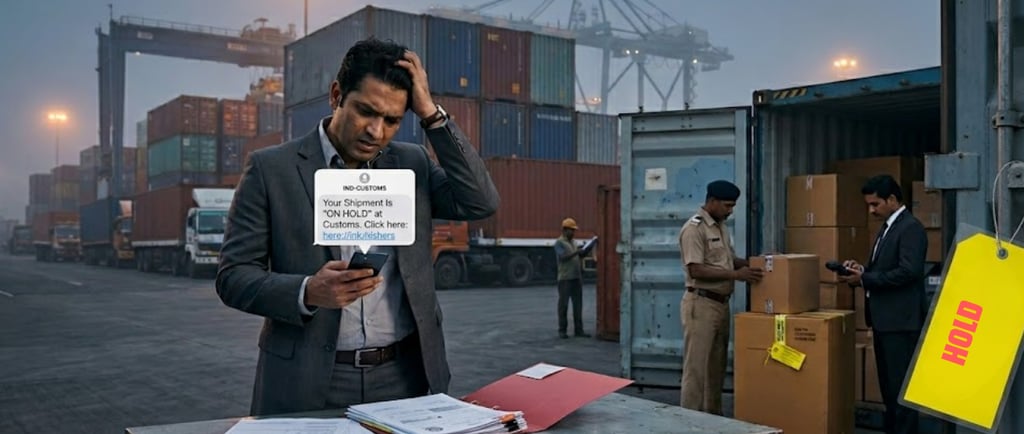
The message comes in on a Tuesday morning.
"Your shipment is on hold at customs."
You reply asking why. The response: "We are checking with the authorities."
Two days later, same answer. On day four, someone mentions a "customs query." On day five, the word "examination" appears. By day seven, you have stopped asking because the answers have stopped meaning anything.
This is one of the most common frustrations in import and export trade in India. And almost nobody on the inside ever explains what is actually happening on the other side of that message.
We have been handling customs clearance across Mumbai for over 15 years. Here is an honest account of what "on hold" actually means, why it happens, and what you should be asking the people handling your shipment.
"On Hold" Is Not One Thing
When a shipment gets flagged during customs clearance in India, it does not mean the same thing every time. Every Bill of Entry that is filed goes through a risk-based assessment by customs authorities. This assessment considers the importer's compliance history, the nature of goods, declared value, country of origin, and HS code classification.
Based on this, each shipment is routed into one of three channels:
First Channel (Green): Customs clearance happens without physical inspection. Documents are verified and the goods are released.
Second Channel (Yellow): Documents go under detailed scrutiny. This may involve a query, a request for additional paperwork, or a challenge to the declared value or HS classification.
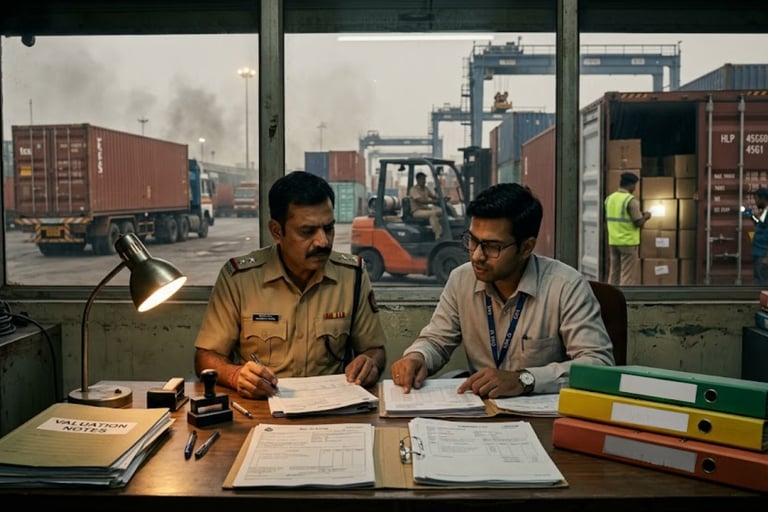
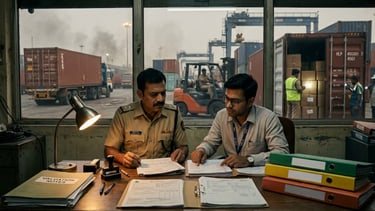
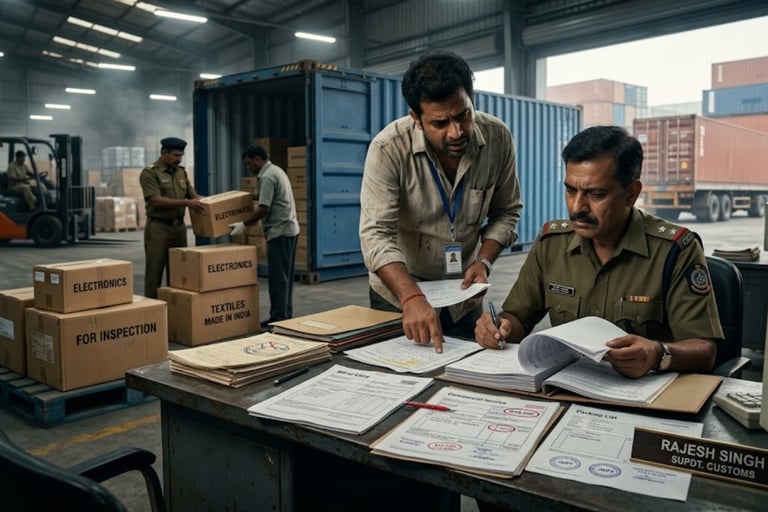
Third Channel (Red/Orange): Physical examination. An officer visits the container freight station or port, opens the packages, and inspects the actual goods against the declaration.
When your freight forwarder says "it's on hold," your shipment has almost certainly moved to the second or third channel. The question is why, and that is exactly where most people stop getting straight answers.
The Real Reasons Shipments Get Held at Customs in India
The most common causes of a customs clearance delay in India are not mysterious. They are also not always the importer's or exporter's fault.
HS Code dispute. Every imported or exported product is classified under a specific Harmonized System code. If the customs officer believes the declared HS code is incorrect, they can reclassify it, potentially attracting a different duty rate. This is one of the most frequent triggers for a customs query in India, and it can happen even when the original classification was reasonable.
Undervaluation concern. Customs maintains reference values for many commodities. If your declared value falls significantly below the expected benchmark for that product, the shipment will be held for a valuation check. This is especially common with electronics, capital goods, and textiles.
Documentation mismatch. A commercial invoice that says one thing, a packing list that says something slightly different, and a Bill of Entry filed on a third interpretation is a reliable way to get your cargo held. Even minor inconsistencies in product description, unit of measurement, or net weight can be enough to trigger a customs query.
Risk profiling. Some importers or exporters are on customs risk profiles based on past transactions. If your IEC or the foreign shipper's profile carries any flags from previous shipments, newer consignments may face additional scrutiny even when the documentation is clean.
Special scrutiny drives. At various points, customs departments issue internal alerts or conduct targeted checks on specific product categories, countries of origin, or trade routes. A perfectly compliant shipment can get delayed simply because it matches a broader profile currently under review.
What Actually Happens During Those Days of Silence
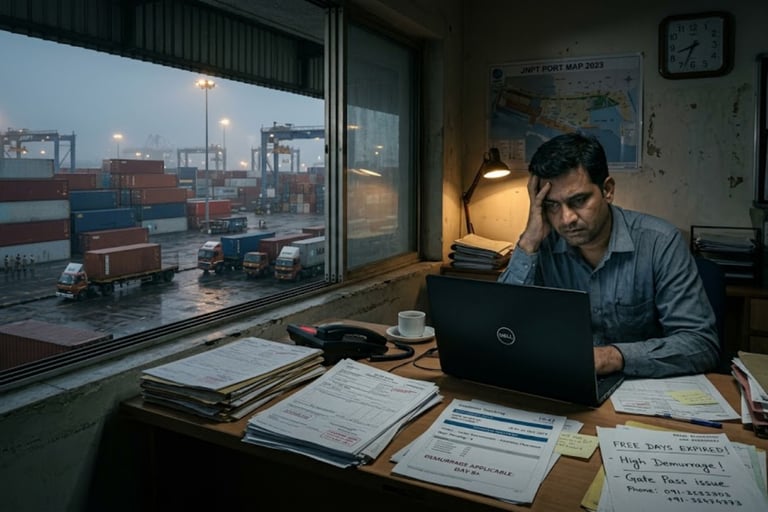
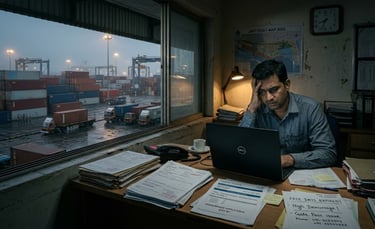
This is the part importers and exporters find most frustrating. Your container is sitting at port. Free days are running. Every 24 hours moves you closer to demurrage charges at the port. And nobody is giving you a useful update.
Here is what is typically happening during that silence.
After a physical examination order is issued, it gets scheduled based on port workload and officer availability. At a port like Nhava Sheva, which handles one of the highest container volumes in India, examination queues commonly run two to four days before the actual inspection even begins.
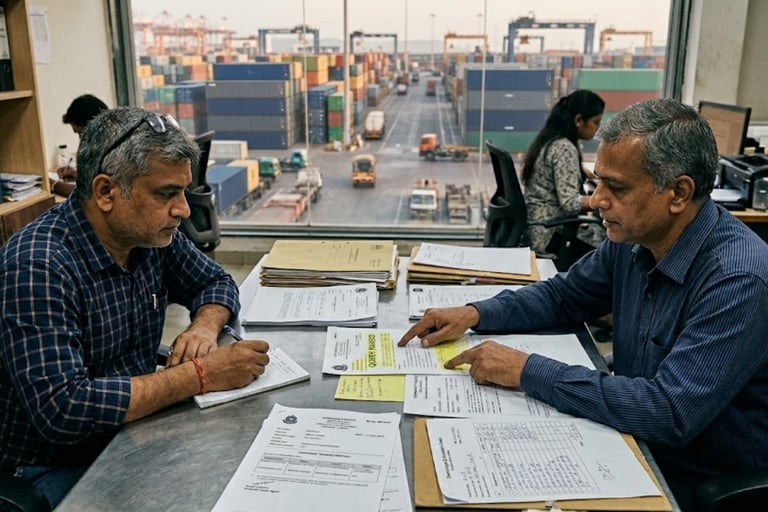
Once the examination takes place, the officer submits a report. If no concerns are found, a release order follows. If there are observations, a formal query or show cause is raised. The importer or their Customs House Agent then needs to respond with documents, clarifications, or arguments before clearance is granted.
During all of this, your CHA and freight forwarder are following up daily, sometimes multiple times a day, with the relevant section at customs. Progress is often invisible from the outside until something actually moves. This is why you keep getting the same non-answer. It is not always evasion. It is, more often, genuine waiting inside a system that does not give daily progress reports.
What You Should Be Asking Your Freight Forwarder or CHA
Not every customs clearance delay in India can be prevented. But you are entitled to real, specific answers. These are the questions worth asking:
Which channel has the shipment been routed to, and when was that determined?
Has a formal query been raised? If yes, what exactly does it say, and what is needed to respond?
If it is going for physical examination, when is the examination scheduled?
What are the current free days at the port or CFS, and when do demurrage charges begin?
Is there anything the importer needs to provide, authorize, or approve to move this forward?
If you are consistently getting vague answers to specific questions, that is a communication problem, not a customs problem.
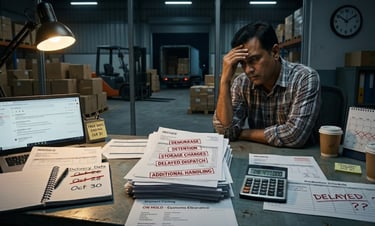
What This Actually Costs You
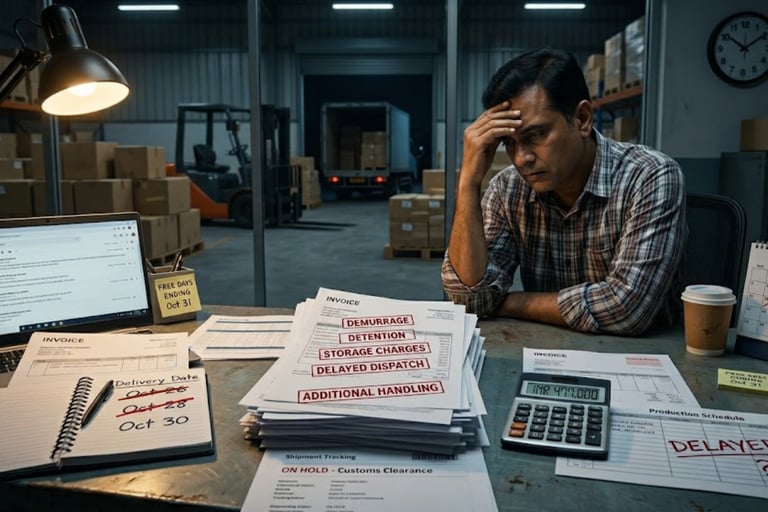
A customs clearance delay in India does not just affect delivery timelines. It affects working capital, production schedules, and sometimes buyer relationships that took years to build.
Demurrage and detention charges at major ports accumulate quickly, particularly on FCL shipments where free days are limited. Add to that the cost of rerouting, rescheduling downstream logistics, and the time your team spends chasing updates, and a "minor" delay becomes genuinely expensive.
The most reliable way to reduce how often this happens is not luck. It is clean, consistent documentation before the Bill of Entry is filed, an experienced CHA who understands your product category and how your goods are classified, and a freight forwarder who tells you what is happening rather than just that something is happening.
GlobeXport Logistics has been handling customs clearance across India for over 15 years, including examination cases, valuation disputes, HS code classification challenges, and post-clearance audits.
If your shipment is currently on hold, or if you want to understand your compliance exposure before the next one arrives, reach out to us at globexportlogistics.com.
Contact
Mobile No. : +917039367574
© 2026. All rights reserved.

Navigation
Office Address:
Office No. 606, Building No. 4, Pink City Complex, Near Royal Park, Ambernath (East)