
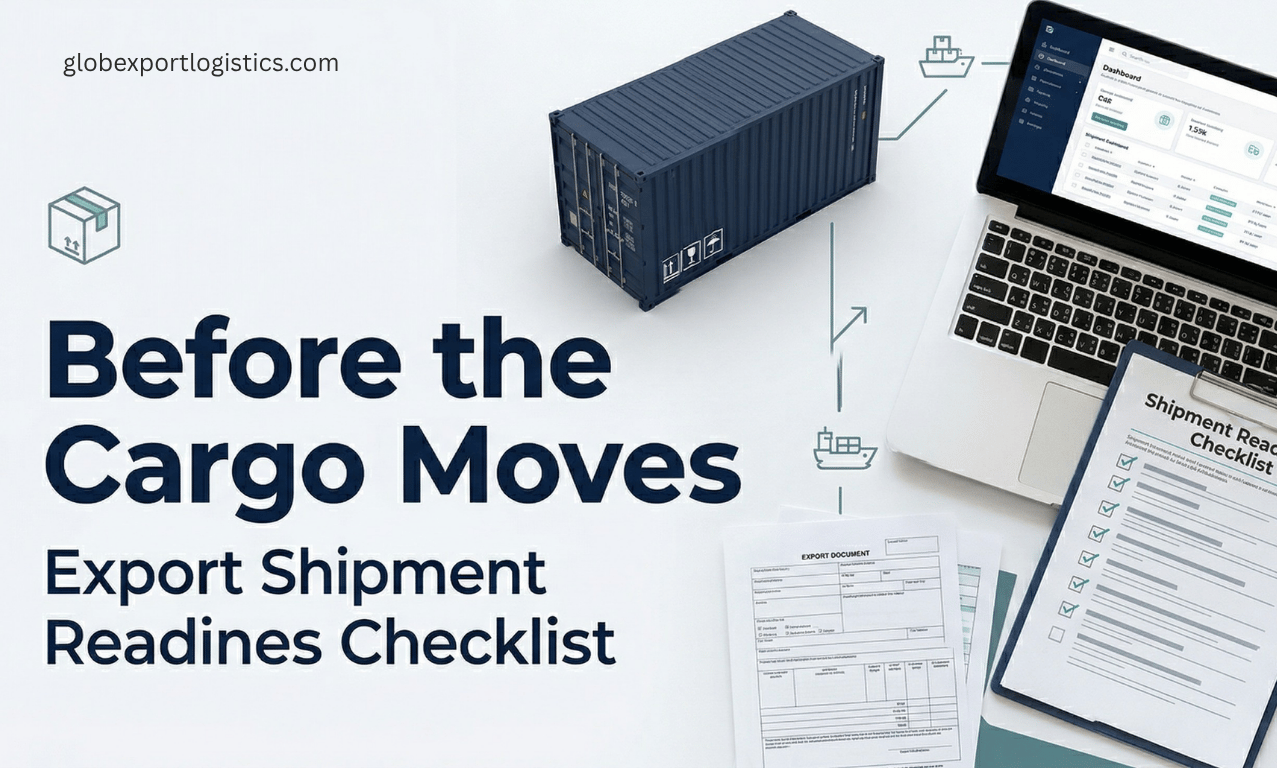
12 Things to Review Before Cargo Moves
In export logistics, delays and avoidable costs often begin before cargo reaches the port or airport.
2 min read
1) Commercial Invoice Accuracy
The commercial invoice should be complete, accurate, and aligned with the transaction terms.
Key details to verify:
buyer and seller details
product description
quantity and unit value
total invoice value
currency
Incoterms
HSN/HS code (where applicable)
Even small inconsistencies can create confusion during customs processing or with overseas buyers.
2) Packing List Consistency
The packing list should match the invoice and reflect the actual cargo being dispatched.
Review:
number of packages
gross and net weight
dimensions
marks and numbers
packaging type
Mismatch between physical cargo and documentation can lead to inspection delays, disputes, or handling issues.
3) HS Code / Classification Validation
Incorrect classification can impact:
customs processing
duty calculations
export declarations
compliance requirements
eligibility for export benefits
A classification review before shipment helps reduce downstream issues and improves documentation confidence.
4) Incoterm Clarity
Every stakeholder involved in the shipment should be clear on the agreed Incoterm.
This affects:
responsibility for freight
insurance scope
origin and destination charges
customs responsibilities
risk transfer point
A shipment may move successfully, but poor Incoterm clarity can still create avoidable cost disputes later.
5) Buyer-Specific Document Requirements
Different buyers and markets may require specific documentation beyond the standard commercial set.
Depending on the shipment, this may include:
certificate of origin
inspection certificates
product-specific declarations
packing specifications
compliance certificates
chamber/legalized documents (where applicable)
Confirming these requirements before dispatch helps avoid post-shipment document rework.
6) IEC / RCMC / License Applicability
Before cargo moves, businesses should confirm whether any regulatory or registration-related requirements apply to the shipment.
This may include:
IEC readiness
RCMC status
product/category-specific permissions
DGFT-linked applicability
license or scheme-related documentation, where relevant
This is especially important for shipments involving regulated goods or benefit-linked exports.
7) Freight Booking Should Not Be Last-Minute
Late booking often reduces flexibility and can increase cost.
Advance planning allows better control over:
carrier options
transit routes
sailing/flight schedules
equipment availability
rate stability
contingency planning during tight capacity periods
Freight should be treated as part of shipment planning, not the final step after cargo is already ready.
8) Pickup / Factory Stuffing / Cargo Readiness
Operational readiness at origin is just as important as booking space.
Review:
cargo availability date
pickup scheduling
stuffing readiness
packaging suitability
labeling / marks
loading supervision (if required)
vehicle/container timing
If origin readiness is unclear, even a well-planned booking can still face disruption.
9) Customs Clearance Documentation Preparedness
Customs readiness should be reviewed before cargo reaches the port/CFS/terminal.
This includes ensuring:
export documents are complete
declarations are aligned
shipment values are consistent
product details are clear
supporting documents are in place
Reactive documentation creates avoidable pressure. Prepared documentation creates smoother execution.
10) Duty / GST / IGST Impact Review
While exporters often focus on freight, the broader financial picture should also be reviewed.
Businesses should understand:
applicable duty implications (where relevant)
GST / IGST treatment
documentation required for tax-linked processes
any impact on overall shipment costing or recovery timelines
Cost awareness should begin before dispatch, not after billing.
11) Export Benefit / Refund Applicability
For many exporters, shipment planning should also include awareness of applicable export benefits and recovery opportunities.
Depending on the shipment and product, this may include review of:
RODTEP
duty drawback
refund-linked documentation
scheme-linked compliance
benefit eligibility conditions
Missed documentation at dispatch stage can later affect claims or recovery efficiency.
12) Free Time / Delay Exposure
Many avoidable logistics costs arise from delays that were not considered early enough.
Before movement, exporters should understand potential exposure around:
terminal free time
detention / demurrage risk
customs hold risk
buyer document approval delays
handover coordination gaps
destination readiness (where relevant)
A shipment that is “booked” is not always a shipment that is fully protected from delay costs.
Final Thought
Strong export operations are built on preparation.
At GlobeXport Logistics, we believe efficient trade comes from aligning movement, documentation, compliance, and commercial awareness, not treating them as separate steps.
Contact
Mobile No. : +917039367574
© 2026. All rights reserved.

Navigation
Office Address:
Office No. 606, Building No. 4, Pink City Complex, Near Royal Park, Ambernath (East)